3.従属接続詞
3.1. 従属接続詞とは?
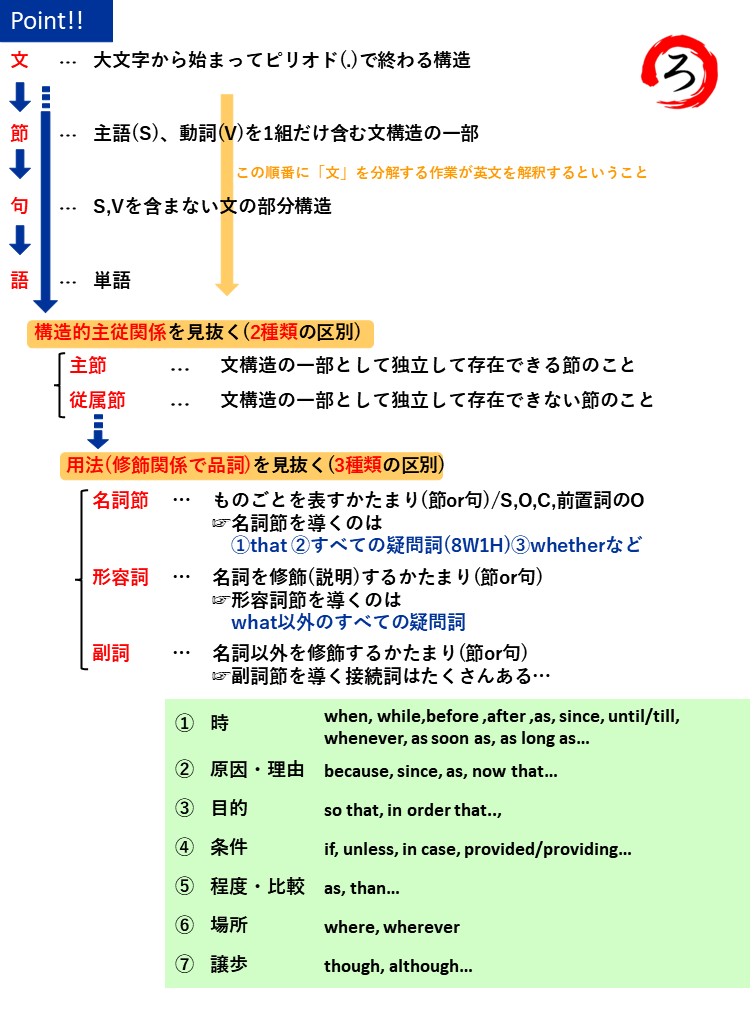
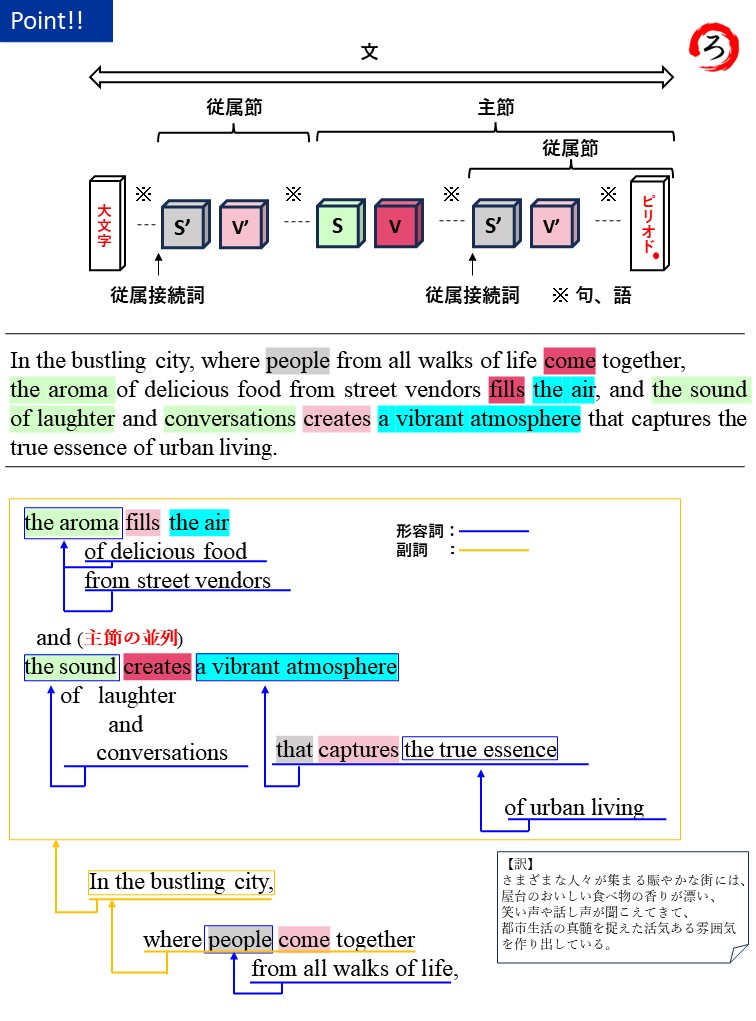
従属接続詞(もしくは従位接続詞)は従属節を形成する接続詞です。
覚えることがあまりに多いですが、こればかりは少しずつ覚えていくしかありませんので、頑張って覚えていきましょう。
大前提として従属節は、それ単体で完全な文構造を形成することができません。
したがって、文法構造上は主節と従属節には文字通り主従関係があり、
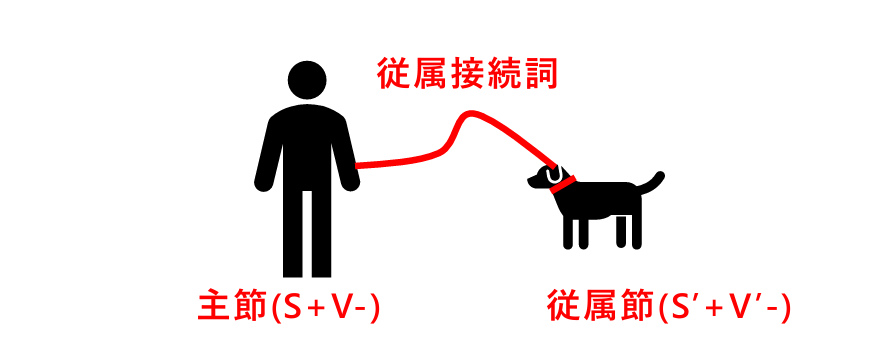
従属節は飼い主(主節)とペット(従属節)の関係だと考えるといいでしょう。
つまり、ペット(従属節)はひとり歩きしていること自体がおかしいのです。
学習方針としては次の点を注意して覚えていきましょう。
・どの接続詞がどの品詞の節を形成するのか。
・そもそも覚えるべき形成される節は副詞節と名詞節です。
・覚えるべき事項が多いのは副詞節を形成する従属接続詞(従位接続詞)である。
・覚えるべきはすべての疑問詞と従属接続詞(従位接続詞)である。
3.2 よく使われる副詞節を形成する従属接続詞
従属接続詞にはたくさんの種類がありますが、以下は代表的なものをカテゴリー別に整理した一覧です。
|
種類 |
接続詞 |
意味 |
種類 |
接続詞 |
意味 |
|
理由 |
because, since as |
なぜなら…、 …だから |
結果 程度 |
so…(形,副)that, such…(名)that |
とても…なので |
|
時間 |
when while before after as soon as as long as until, till |
…のとき、 の前に、 …の後に |
譲歩 (分岐条件) |
Whether A or B |
…AかBはさておき |
|
条件 |
if, unless, provided that, on condition that, in case, as long as |
もし…なら、 …でない限り |
時間 (否定表現) |
no sooner…than, hardly…when, scarcely…when |
…するとすぐに |
|
目的 |
so that, in order that, for the purpose that |
…するために、 …であるように |
方法 手段 様態 |
as, as if, as though |
…のように |
|
譲歩 逆接 |
although, though, even though, while |
…けれども、 …でも |
|
|
|
|
比較 程度 |
than, as…as, rather than |
…よりも、 …と同じく |
|
|
|
3.2.1 理由の用法で用いる従属接続詞【because, since, as】
- She stayed home because she wasn't feeling well.
(彼女は体調が悪かったので家にいました。)
- I can't go out tonight because I have a lot of work to finish.
(今夜はたくさんの仕事を終わらせなければならないので、外出できません。
- Since the weather is so nice, let's have lunch outside.
(天気がとても良いので、外で昼食をとりましょう。)
- I decided to take a break since I had been working for hours.
(何時間も働いていたので、休憩を取ることにしました。)
- I didn’t interrupt her as she looked busy.
(彼女が忙しそうだったので、邪魔をしませんでした。)
- As he was the only one who could drive, he took us all to the party.
(彼が運転できる唯一の人だったので、彼がみんなをパーティーに連れて行きました。)
3.2.2 時間の用法で用いる従属接続詞
【when, while, before, after, as soon as, as long as, until, till】
- When she arrived at the station, the train had already left.
(彼女が駅に着いたときには、電車はすでに出発していました。)
- While I was reading a book, she was watching TV.
(私が本を読んでいる間、彼女はテレビを見ていました。)
- Finish your homework before you go out to play.
(遊びに出かける前に宿題を終わらせなさい。)
- After he finished the project, he went on vacation.
(彼はプロジェクトを終えた後、休暇に出かけました。)
- She left the office as soon as her work was done.
(彼女は仕事が終わるとすぐにオフィスを出ました。)
- You can stay here as long as you follow the rules.
(ルールを守る限り、ここにいても構いません。)
- Don’t leave until(till) I get back.
(私が戻るまで出かけないでください。)
3.2.3 条件の用法で用いる従属接続詞
【if, unless, provided that, on condition that, in case, as long as】
- If she studies hard, she will pass the exam.
(もし彼女が一生懸命勉強すれば、試験に合格するでしょう。)
- We can’t go hiking unless the weather improves.
(天気が良くならない限り、ハイキングには行けません。)
- We'll approve the plan provided that the costs don’t exceed the budget.
(予算を超えない限り、その計画を承認します。)
- I’ll give you the day off on condition that you finish your work first.
(まず仕事を終わらせるという条件で、休暇をあげます。)
- Take an umbrella in case it rains.
(雨が降る場合に備えて傘を持って行きなさい。)
- You can stay here as long as you behave yourself.
(お行儀よくしている限り、ここにいても大丈夫です。)
3.2.4 目的の用法で用いる従属接続詞【so that, in order that, for the purpose that】
- I left early so that I could catch the last train.
(私は終電に間に合うように早く出発しました。)
- They trained every day in order that they could win the championship.
(彼らは優勝するために毎日練習しました。)
- She organized the event for the purpose that the community could come together.
(コミュニティが一つになるように、彼女はそのイベントを企画しました。)
3.2.5 譲歩・逆接の用法で用いる従属接続詞
【although, though, even though, while】
- Although it was raining, they decided to go for a walk.
(雨が降っていたけれど、彼らは散歩に行くことにしました。)
- Though it was cold, they enjoyed the picnic.
(天気が寒かったけれど、彼らはピクニックを楽しみました。)
- She smiled even though she was feeling nervous.
(緊張していたにもかかわらず、彼女は微笑みました。)
- While she loves traveling, she doesn’t enjoy long flights.
(彼女は旅行が好きですが、長時間のフライトは楽しめません。)
3.2.6 比較・程度の用法で用いる従属接続詞【than, as…as, rather than】
- This problem is more complicated than I expected.
(この問題は私が思っていたよりも複雑です。) - This hotel isn’t as expensive as I thought.
(このホテルは思っていたほど高くありません。)
- They decided to take action rather than they complain about the situation,
(彼らが状況について文句を言うよりも、行動を起こすことにしました。)
3.2.7 結果・程度の用法で用いる従属接続詞【so…(形,副)that, such…(名)that】
- The movie was so interesting that I watched it twice.
(その映画はとても面白かったので、2回も見ました。)
- He spoke so quickly that I couldn’t understand him.
(彼はとても早口で話したので、理解できませんでした。)
- It was such a beautiful day that we decided to go to the beach.
(とても素晴らしい天気だったので、ビーチに行くことにしました。)
- They had such a big argument that they stopped talking to each other.
(彼らはとても大きな口論をしたので、お互いに話さなくなりました。)
3.2.8 理解・認識の用法で用いる従属接続詞【whether】
Whether it is sunny or whether it is rainy, I won't go.
(晴れだろうが雨だろうが、私は行きません。)
3.2.9 時間(否定表現) の用法で用いる従属接続詞
【no sooner…than, hardly…when, scarcely…when】
1.1 He entered the room, and no sooner he closed the door than the phone started ringing.
1.2 No sooner had he entered the room than the phone started ringing.
(彼が部屋に入るや否や、電話が鳴り始めました。)
2.1 The train left the station, and hardly it started moving when it began to rain.
2.2 Hardly had the train left the station when it started raining heavily.
(電車が駅を出て動き始めた途端に雨が降り始めました。)
3.1 I opened the book, and scarcely I began reading when someone knocked on the door.
3.2 Scarcely had I opened the book when someone knocked on the door.
(本を開いた途端、誰かがドアをノックしました。)
3.2.10 方法・手段・様態の用法で用いる従属接続詞【as if, as though, (asは後述)】
- She looked at me as if I had said something strange.
(彼女はまるで私が変なことを言ったかのように私を見ました。)
- He behaved as though he didn’t care about the results.
(彼は結果に興味がないかのように振る舞いました。)
![英文法の核 (東進ブックス) [ 西きょうじ ]](https://thumbnail.image.rakuten.co.jp/@0_mall/book/cabinet/6824/9784890856824.jpg?_ex=128x128 "英文法の核 (東進ブックス) [ 西きょうじ ]")
- 価格: 1045 円
- 楽天で詳細を見る
![大学入試 ひと目でわかる英文読解 (赤本プラス) [ 登木 健司 ]](https://thumbnail.image.rakuten.co.jp/@0_mall/book/cabinet/1317/9784325241317_1_2.jpg?_ex=128x128 "大学入試 ひと目でわかる英文読解 (赤本プラス) [ 登木 健司 ]")
![TOEIC L&Rテスト文法問題でる1000問 [ TEX加藤 ]](https://thumbnail.image.rakuten.co.jp/@0_mall/book/cabinet/0833/9784866390833_1_6.jpg?_ex=128x128 "TOEIC L&Rテスト文法問題でる1000問 [ TEX加藤 ]")
![公式TOEIC Listening & Reading 問題集 10 [ ETS ]](https://thumbnail.image.rakuten.co.jp/@0_mall/book/cabinet/3713/9784906033713_1_3.jpg?_ex=128x128 "公式TOEIC Listening & Reading 問題集 10 [ ETS ]")
![TOEIC L&R TEST 出る単特急金のフレーズ [ TEX加藤 ]](https://thumbnail.image.rakuten.co.jp/@0_mall/book/cabinet/5686/9784023315686.jpg?_ex=128x128 "TOEIC L&R TEST 出る単特急金のフレーズ [ TEX加藤 ]")
![出る単特急 銀のフレーズ (TOEIC L&R TEST) [ TEX加藤 ]](https://thumbnail.image.rakuten.co.jp/@0_mall/book/cabinet/6843/9784023316843.jpg?_ex=128x128 "出る単特急 銀のフレーズ (TOEIC L&R TEST) [ TEX加藤 ]")
![英文法詳解 新装復刻版 [ 杉山 忠一 ]](https://thumbnail.image.rakuten.co.jp/@0_mall/book/cabinet/5934/9784053055934_1_3.jpg?_ex=128x128 "英文法詳解 新装復刻版 [ 杉山 忠一 ]")
- 価格: 2640 円
- 楽天で詳細を見る